01
State Management
Every swipe computes a target grid matrix instantly. The game board is entirely deterministic, allowing us to predict valid moves and trigger game-over states without delay.
[ System Architecture ]
We believe a puzzle game should feel like a well-oiled machine. Discover how we balance spawn probabilities, manage touch events, and render smooth state transitions on a minimal grid.
Explore Our Process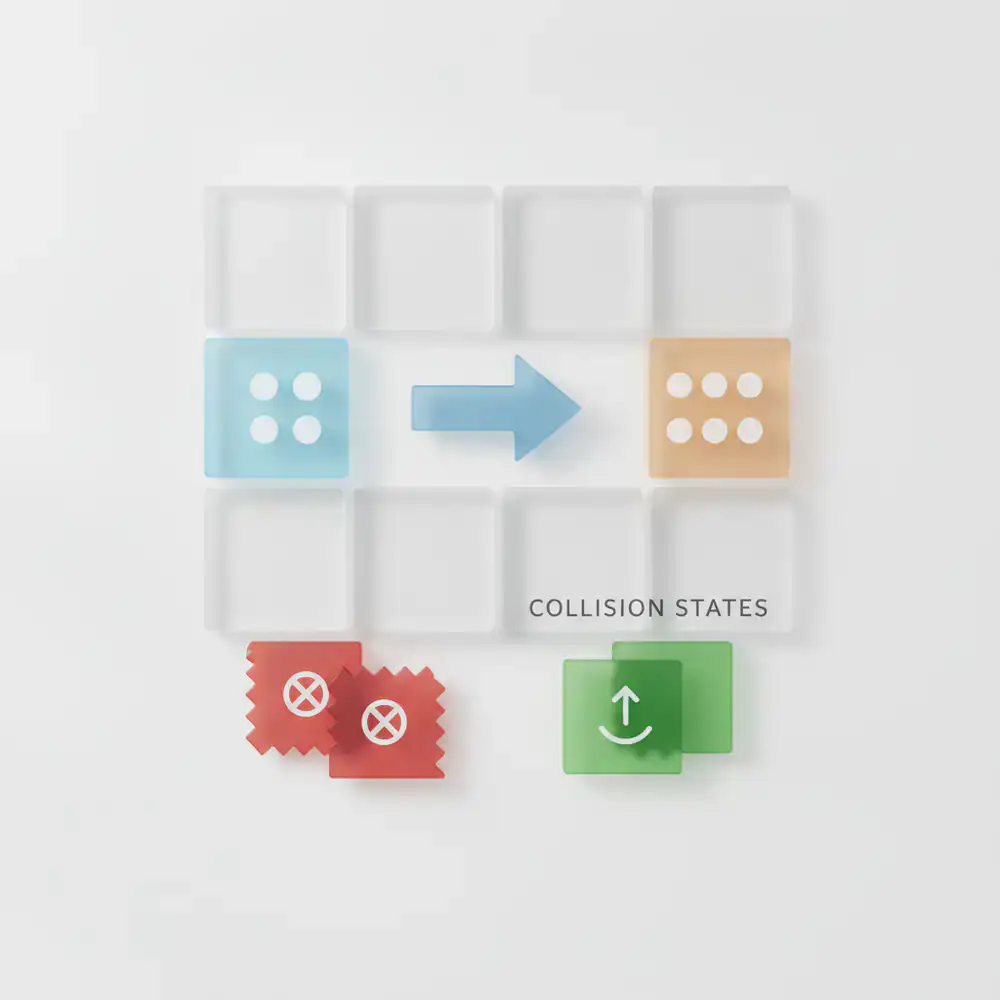
[ Core Mechanics ]
Every swipe computes a target grid matrix instantly. The game board is entirely deterministic, allowing us to predict valid moves and trigger game-over states without delay.
Instead of linking logic to framerate, we pass logical states to a dedicated animation queue. Tiles slide and pop precisely, while inputs remain responsive mid-animation.
When tiles collide, a temporary ghost entity is spawned to handle the impact effect. The actual board value updates behind the scenes exactly at the point of collision.
[ RNG & Balance ]
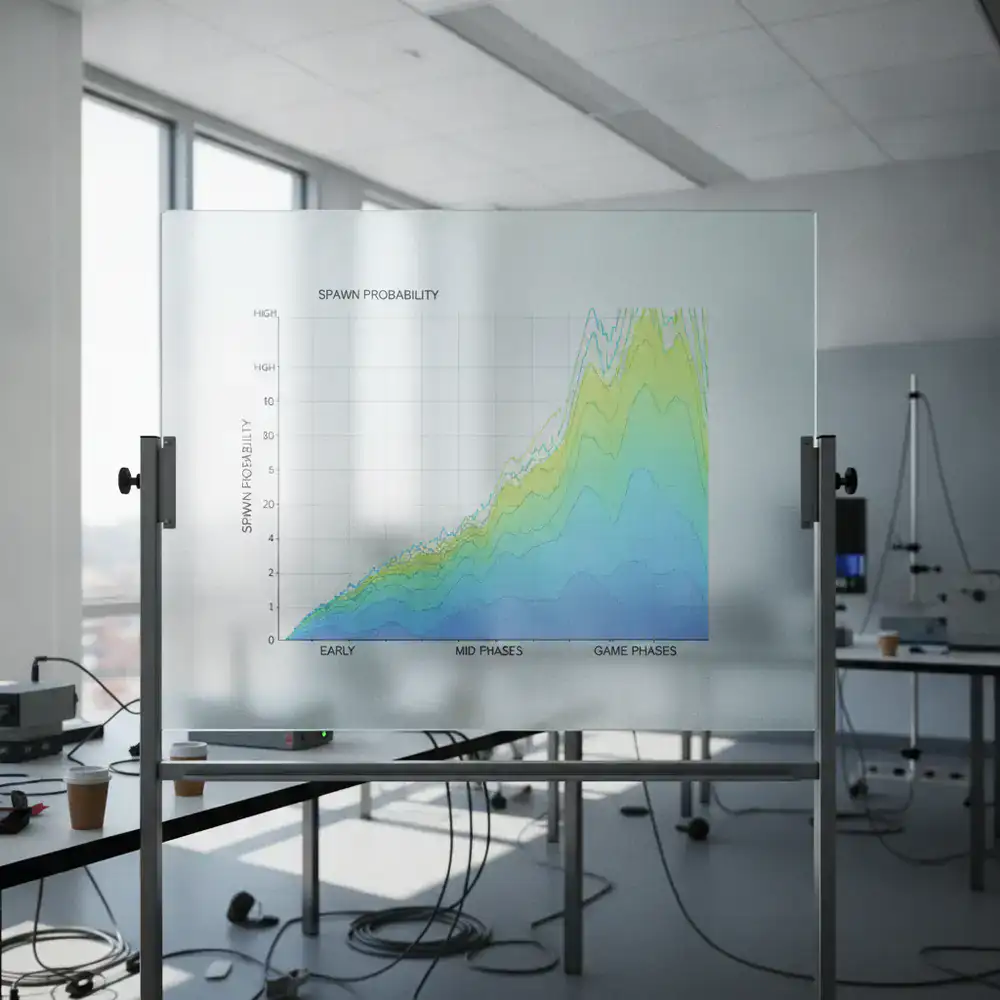
A completely random spawn system creates frustrating dead ends. To maintain flow, we implemented a controlled probability curve that adjusts based on board density.
In the early game, the generator heavily favors basic low-value tiles to build a strong foundation. As high-tier tiles emerge, the spawn engine subtly shifts the weights, preventing sudden mathematical lockouts.
[ Engine Constraints ]
Puzzle games shouldn't drain batteries. We discarded heavy game engines in favor of a lightweight canvas renderer specifically tailored for 2D coordinate math.
By batching draw calls and relying exclusively on vector geometry for tiles, the game runs at a locked 60 frames per second on almost any hardware—all while using a fraction of typical memory overhead.
[ Connect ]
Interested in our tech stack, testing phases, or technical collaborations? Drop us a line. For direct emails, contact contact@tilemergelab.com.